
Global tourism confronts its worst disruption since the pandemic, as airspace closures across the Middle East have grounded over 20,000 flights and stranded more than 1 million travelers. The crisis threatens the $11.7 trillion global travel industry, hitting destinations from Thailand to Germany with unprecedented force.
Middle East Hub Shutdowns Ripple Globally
Dubai, Abu Dhabi, and Doha airports halted operations starting March 1 following regional security threats involving missiles and drones. These closures severed crucial transit connections between Asia, Europe, Africa, and the Americas.
Major carriers, including Emirates, Etihad, Qatar Airways, and Lufthansa, suspended thousands of flights. Emirates canceled 38.5% of scheduled services, while Qatar Airways grounded over 50% of operations. Airlines now scramble to reroute flights through Turkey or to operate costly direct long-haul routes to avoid closed airspace.
Tourism Destinations Face Economic Damage
Thailand recorded 328 flight cancellations affecting 49,688 passengers between February 28 and March 4. The disruption threatens Thailand’s ambitious target of 36.7 million foreign visitors in 2026. Chinese New Year arrivals, which surged to 30,000 daily, now face uncertainty as Middle Eastern connection hubs remain closed.
European tourism suffers equally severe impacts. Paris, London, and Rome report sharp declines in spring travel bookings. Germany, Cyprus, Japan, and the UK watch tourism stocks plunge by an average of 12% amid investor fears of prolonged disruptions.
India’s travel sector takes massive hits with IndiGo shares dropping 7% and Ixigo plummeting 14%. Over 350 flights were canceled in a single day at Indian airports, with Delhi and Mumbai bearing the heaviest impact.
Airfare Prices Surge on Alternative Routes
Airlines forced to reroute around closed airspace now add 2-4 hours to journeys. Flights between Asia and Europe cost 10-20% more due to increased fuel consumption and longer routes. Australian carrier Qantas reroutes Perth-London flights through Singapore for refueling, completely restructuring schedules.
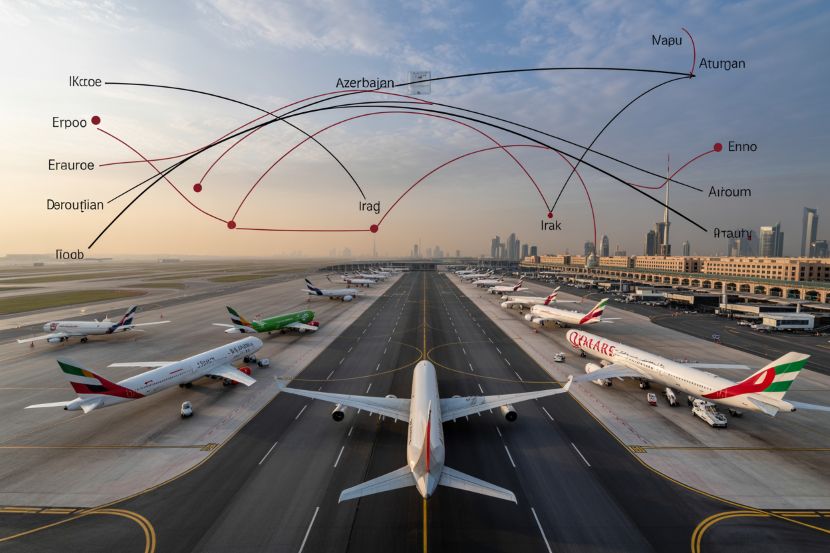
Turkish Airlines gains a competitive advantage as Istanbul becomes the primary connection hub for diverted traffic. However, the narrow Caucasus corridor between Russia and Iran creates bottlenecks in handling traffic that previously spread across thousands of miles.
Travel Insurance Complications Mount
Standard travel insurance policies that exclude war and airspace closure leave many travelers facing significant financial losses. Only policies that explicitly cover political instability and government travel warnings provide compensation for nonrefundable hotel stays, tours, and connecting flights.
Stranded passengers crowd terminals in Dubai, Doha, and Abu Dhabi, waiting for scarce relief flights. Social media is filled with images of departure boards showing nothing but cancellations and endless queues at the rebooking desk.
Recovery Timeline Remains Uncertain
While UAE authorities began a cautious resumption of limited flights on March 4, most corridors remain highly restricted. Airlines continue suspending services through at least mid-March as they reposition aircraft and crews.
Tourism industry analysts predict effects lasting well into March 2026 and potentially beyond. The crisis compounds existing challenges from Russian airspace closures that have affected European-Asian routes since 2022.
Regional governments must work with airlines to restore travel confidence through transparent communication, flexible booking policies, and financial incentives. Until then, global tourism faces its most turbulent period in years.
Planning international travel? Check Trailsduniya’s travel updates for the latest flight information and destination advisories.