
Spiti Valley is the most searched adventure destination in India right now.
The roads are clearing. The snow walls are still standing tall. The skies are electric blue. And most importantly, the July crowds have not arrived yet.
If you want to see Spiti at its most raw and quiet, April and May give you the best shot. This guide covers everything you need to plan a trip before the season peaks.
What Is Spiti Valley, and Why Is It Trending in 2026?
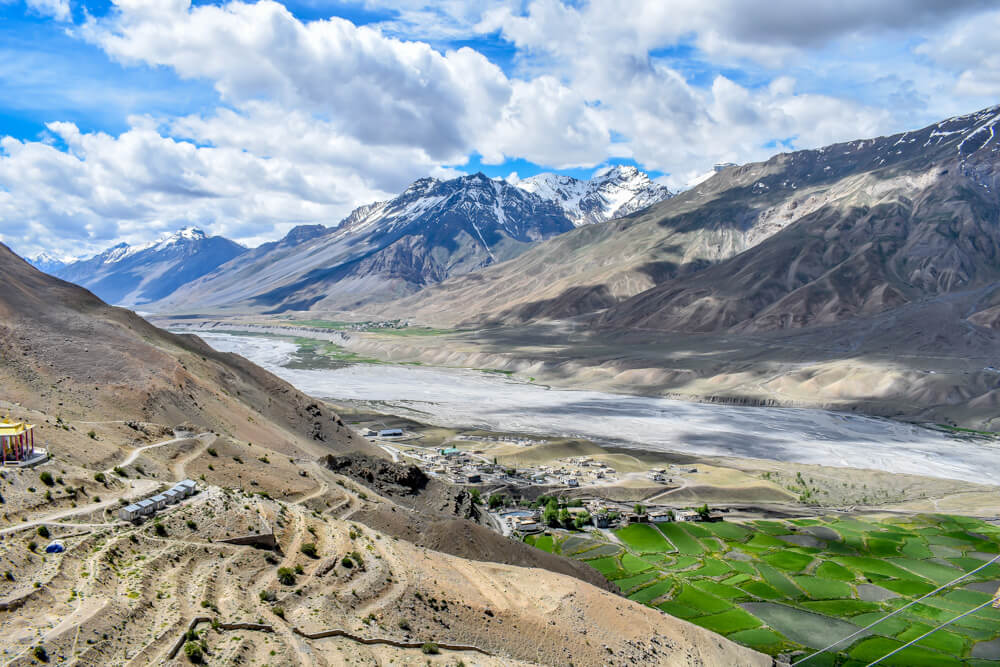
Spiti Valley sits in the remote northeastern corner of Himachal Pradesh. People call it Little Tibet. Others call it the Cold Desert of the Himalayas. Both names fit perfectly.
The valley sits at an average altitude of over 12,000 feet. Ancient Buddhist monasteries cling to clifftops. Turquoise rivers cut through moon-like brown landscapes. Villages here have no mobile signal, no traffic, and no noise.
According to StayVista’s April 2026 travel data, Spiti just became the number one trending adventure destination in India. The reason is timing. The season just opened. The roads are fresh. The crowds have not found their way in yet. Travelers who know Spiti are booking fast.
Also Read our Trending Blogs:
15 Hidden Gems in the USA Most Travelers Miss
Perfect 7-Day USA Travel Itinerary for First-Time Visitors (2026)
Thailand Travel Guide 2026: Best Places to Visit
Tomorrowland Thailand 2026: How to Pre-Register Online
Kashmir in April 2026: Tulip Season Travel Guide
When Should You Go?
Spiti does not stay open all year. Picking the right window makes a big difference.
April to May is the best time to go right now. This is the opening window of the season. The Manali route via Kunzum Pass is still being cleared by the Border Roads Organisation, so most travelers enter via the Shimla to Kinnaur route. You get dramatic snow walls on the road, deep blue skies, quiet monasteries, and very few other tourists. This is the window for photographers, solo travelers, and anyone who wants Spiti without the crowd.
June to July is when both routes fully open. The Manali route typically opens by late May or early June after BRO completes snow clearance. This is peak season. Road access is maximum, but so are tourist numbers and prices.
August to September is a quieter, greener option. Monsoon brings a brief flash of green to the brown landscape. Fewer tourists arrive. September skies are exceptionally clear. Budget travelers who want calm and value should consider this window.
October onward is when routes start closing. The Manali route shuts by mid-October due to snowfall. The Shimla route stays open longer but becomes risky. Only experienced cold-weather travelers should attempt this window.
Six Places You Cannot Miss in Spiti
Spiti is not a single destination. It is a circuit of very different small worlds. Here are the six stops that stay with people the longest.
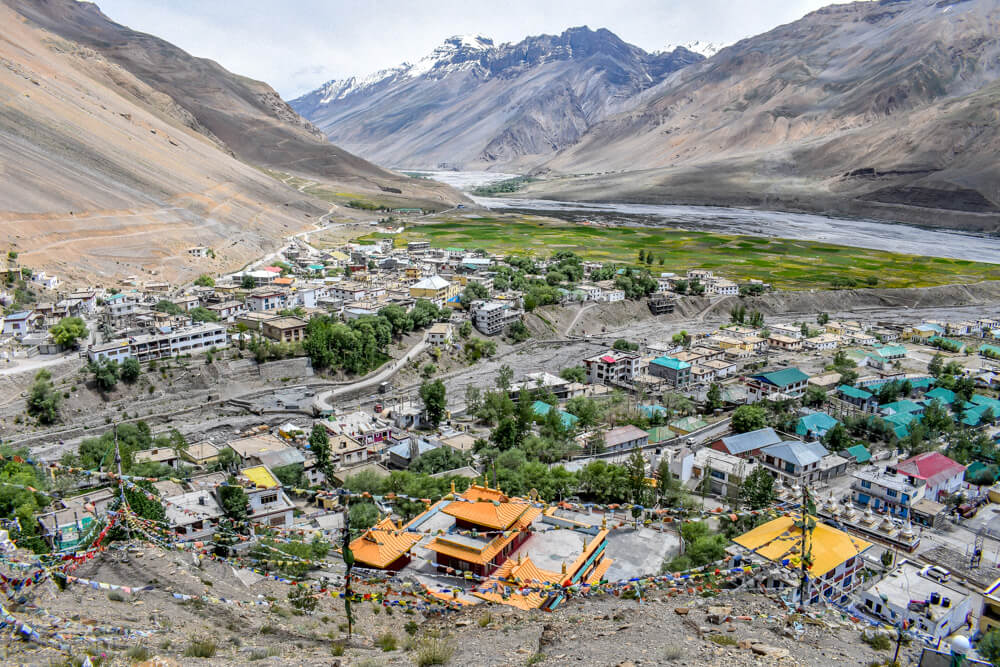
Key Monastery stands on a hilltop above the Spiti River at over 13,500 feet. It is the largest monastery in the valley. Morning prayers here are genuinely moving. The rooftop view stretches across the entire valley floor. Give it at least two hours.
Chandratal Lake sits at 4,250 metres and takes its name from its crescent shape. The turquoise water mirrors snow-capped peaks on every side. Sunrise and sunset here rank among the most beautiful moments in all of India. In 2026, the camps nearby are increasingly eco-conscious. Carry your own refillable water bottle.
Langza Village sits at 4,420 metres. You can find actual marine fossils lying on the ground here, left by an ancient sea that once covered this region. A 1,000-year-old Buddha statue watches over the valley from the village edge. The stargazing at night is among the best anywhere in India.
Hikkim holds the record for the world’s highest functional post office, sitting at 14,567 feet. You can send a postcard home from here. It is a small thing. It becomes a story you tell for years.
Tabo Monastery was founded in 996 AD and has been active without interruption ever since. Historians call it the Ajanta of the Himalayas. The murals inside have survived over 1,000 years. It is one of the most important Buddhist heritage sites in the entire Himalayan region.
Chicham Bridge is Asia’s highest motor suspension bridge, hanging 150 metres above a canyon. Crossing it by road is one of those moments that stays with you. Look down only if you are ready for it.
How Much Does a Spiti Trip Cost in 2026?
A budget trip from Delhi covering 9 days costs roughly Rs 13,000 to Rs 18,000 per person. This covers HRTC buses, homestay accommodation, local dhabas for food, and essential permits.
A mid-range group tour for the same duration runs Rs 18,000 to Rs 28,000 per person, including shared taxis, better guesthouses, and a guide.
A private couple trip with a hired SUV costs Rs 30,000 to Rs 45,000 per person.
Here is a quick per-day cost guide:
| Category | Budget | Mid-Range |
|---|---|---|
| Accommodation | Rs 800 to 1,200 per night | Rs 1,500 to 2,500 per night |
| Food | Rs 300 to 500 per day | Rs 600 to 900 per day |
| Local transport | Rs 300 to 600 per day | Rs 1,000 to 1,800 per day |
| Permits and entry | Rs 200 to 500 total | Rs 200 to 500 total |
Indian nationals do not need a permit to visit Spiti Valley. No permit is required for Kaza, Key Monastery, Langza, Tabo, or Chandratal. Foreign nationals need an Inner Line Permit for the Spiti and Kinnaur region.
Six Tips That Make the Trip Better
Take your first day slow. Kaza sits at roughly 3,800 metres. Walk slowly. Drink water constantly. Altitude sickness ruins trips that skip the acclimatization day.
Enter via Shimla in April. The Manali route is still clear in April. The Shimla to Kinnaur route stays open year-round and passes through some of the most beautiful river valley scenery in Himachal Pradesh.
Rent a high-clearance vehicle. Sedans cannot survive several Spiti roads, particularly between Batal and Chandratal. Rent a Bolero, Thar, or SUV. Many first-timers learn this after one water crossing.
Carry cash before Reckong Peo. ATMs disappear completely after Reckong Peo. Carry enough cash for your entire trip. Add a buffer of Rs 3,000 to Rs 5,000 for unexpected road closures or extra nights.
Book homestays early for May. Good homestays in Langza, Kibber, and Dhankar fill up weeks ahead in peak season. In April, you still have good options at lower prices. Book now if you are planning soon.
Pack layers, not just a jacket. Spiti mornings and nights are cold even in summer. Afternoons can feel warm in the sun, but temperatures drop fast in the shade. Light thermals, a fleece, and a windproof jacket together work better than one heavy coat.
The Bottom Line: Spiti in April is a different place from Spiti in July
In April, the snow walls on the roads stand taller than your vehicle. The monasteries are quiet. You can sit at Chandratal for an hour without seeing another soul.
By July, the roads fill with bikes and SUVs. Campsites buzz with generators. The magic is still there. You just share it with hundreds of others.
The window is open right now. Book before July. You will thank yourself.