
The words “Strait of Hormuz” are all over the news. Oil prices are climbing. LPG deliveries are getting delayed. Airlines are changing routes. And now the US has announced a full naval blockade.
This is a clear, simple breakdown of what is happening, why this tiny waterway matters so much, and what it actually means for you in India.
What Is the Strait of Hormuz?
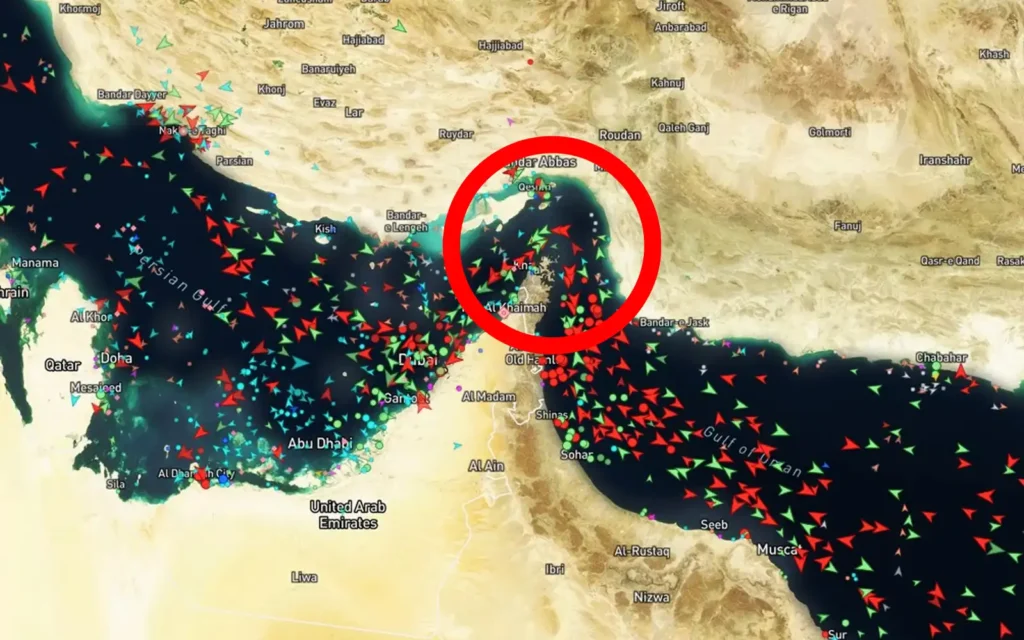
The Strait of Hormuz is a narrow waterway between Iran (to the north) and Oman (to the south). At its narrowest, it is only about 29 nautical miles (54 km) wide.
It is the most critical oil and gas shipping route in the world.
| What passes through it | How much |
|---|---|
| World’s daily oil supply | ~20% (about 20.9 million barrels/day) |
| World’s LNG (cooking/industrial gas) | ~20% |
| Global fertiliser trade | ~30% |
| All Gulf oil heading to Asia | ~84% |
There is no real alternative. Saudi Arabia and the UAE have some pipeline routes, but they handle only about 17% of normal traffic. Most ships have no other option.
How Did This Crisis Start? (Quick Timeline)
| Date | What Happened |
|---|---|
| Feb 28, 2026 | USA + Israel launch airstrikes on Iran (Operation Epic Fury). Iran’s Supreme Leader Ali Khamenei is killed. |
| March 2, 2026 | Iran officially closes the Strait of Hormuz. IRGC attacks merchant ships and lays sea mines. |
| March 11, 2026 | India’s crude oil basket hits $113.57/barrel (was $62–70 earlier in the year). |
| March 18, 2026 | Iran strikes Qatar’s Ras Laffan LNG complex. Qatar’s LNG output drops 17%. LNG prices in Asia jump 140%. |
| March 26, 2026 | Iran grants India, China, Russia, Iraq, and Pakistan permission to transit the strait. |
| April 7–12, 2026 | US-Iran peace talks held in Islamabad, Pakistan. Talks fail after 21+ hours of negotiations. |
| April 11, 2026 | Two US Navy destroyers transit the strait for the first time since the war began. |
| April 13, 2026 | Trump announces a US naval blockade of all Iranian ports. Blockade begins at 10am ET (7:30pm IST). |
| April 14, 2026 (today) | At least 15 Indian-flagged vessels are stranded in the strait. Situation still evolving. |
Why This Is Bigger Than Any Previous Oil Crisis
The International Energy Agency (IEA) called this the “largest supply disruption in the history of the global oil market,” bigger than the 1973 oil shock, the 1979 Iranian Revolution, and Iraq’s invasion of Kuwait in 1990.
Before this crisis, about 20.9 million barrels of oil passed through the Strait every single day. That flow has now dropped to a trickle.
What the US Blockade Actually Means
On April 13, Trump announced a naval blockade after peace talks in Islamabad collapsed.
Here is what the US said:
- The blockade targets Iranian ports, specifically not all traffic through the strait
- Ships going to/from non-Iranian ports can still transit
- The US Navy will stop any ship that pays Iran a toll to pass through
Here is what happened immediately after:
- Tanker traffic halted again within hours of the announcement
- Iran’s IRGC said any military vessel approaching the strait would face a “severe response.”
- UK said it will not support the blockade
- France, Spain, Turkey, and China also criticized the move
- French President Macron announced a peace conference to restore freedom of navigation
Also Read our Trending Blogs:
15 Hidden Gems in the USA Most Travelers Miss
Perfect 7-Day USA Travel Itinerary for First-Time Visitors (2026)
Thailand Travel Guide 2026: Best Places to Visit
Tomorrowland Thailand 2026: How to Pre-Register Online
Affordable Hotels near Tomorrowland Thailand
How Is India Affected?
India imports 80% of its crude oil. A large share comes through the Strait of Hormuz. Here is exactly how the crisis is hitting India:
Energy Sector
| Item | Impact |
|---|---|
| Crude oil price | Rose from $62–70/barrel to $113.57/barrel (March 11 data) |
| LPG supply | 60% of India’s LPG comes through Hormuz delays and shortages reported |
| Petrol/diesel | Govt issued a Natural Gas Control Order on March 9, 2026, to manage supplies |
| Natural gas | Govt issued a Natural Gas Control Order on March 9, 2026 to manage supplies |
Economy Sector
| Factor | What It Means |
|---|---|
| Rupee weakness | MUFG Research warns USD/INR could hit 95–97 if oil stays at $100/barrel |
| Inflation risk | Inflation could rise above 4.5% for FY2026–27 if crude stays near $100/barrel |
| Current account deficit | Could widen to ~3% of GDP (was projected at 1.5%) |
| Every $10 rise in oil prices | Adds 0.4–0.5% to India’s current account deficit |
What India Has Done
- Set up a 24×7 control room to monitor petroleum stocks and vessel movements
- 28 Indian-flagged vessels were in the region (as of March 11). At least 15 remain stranded (as of April 13)
- India now imports crude from 40 countries to reduce dependence on any single region
- Govt says it holds roughly 50 days of crude oil and refined product reserves
- India’s crude basket hit $113.57/barrel on March 11, a steep jump from the year’s average of $62–70
India got a partial reprieve: Iran granted Indian-flagged vessels permission to transit the strait on March 26, along with China, Russia, Iraq, and Pakistan.
Beyond Oil: Other Things at Risk
Most people focus on petrol prices. But the crisis is hitting a lot more than fuel.
| Commodity | What It Is Used For | Urea / Fertilizer |
|---|---|---|
| LNG | Cooking gas, power generation | ~20% of global supply |
| Fertilizers, EV battery production | Farming, crop production | ~30% of global seaborne trade |
| Sulphur | Plastics, paints, and synthetic fabrics | ~50% of global seaborne trade |
| Methanol | Plastics, paints, synthetic fabrics | ~33% of global seaborne trade |
This means food prices, manufacturing costs, and even electric vehicle production are all at risk. The World Economic Forum has warned that supply chains are being reshaped globally.
Explore More Blogs:
How to Plan a Vacation in 2026: Step-by-Step Trip Planning Guide
Trending Travel Destinations 2026: Where the World is Heading
Thailand Travel Guide 2026: Your Dream Tropical Escape
15 Hidden Gems in the USA Most Travelers Miss
Hidden Cultural Gems Before Mass Tourism Transforms Them Forever
New Orleans in 2026: The Most Exciting City in America
What Are the Alternative Routes?
Ships that cannot use the strait have two options:
1. Oman’s bypass ports Oman’s ports at Duqm, Salalah, and Sohar sit in the Arabian Sea, outside the strait. Some tankers are diverting here. But these ports cannot handle the full volume of Gulf oil exports.
2. Cape of Good Hope (South Africa) Most rerouted tankers are going all the way around the southern tip of Africa. This adds 10–14 extra days to the journey and significantly increases shipping costs.
Both options are far more expensive and slower than using the strait directly.
Official Links You Should Bookmark
These are verified government and institutional sources. Check them regularly for updates:
Indian Government
- 🇮🇳 MEA Travel Advisory (Iran): https://www.mea.gov.in/iran-travel-advisory.htm
- 🇮🇳 MEA All Travel Advisories: https://www.mea.gov.in/travel-advisories.htm
- 🇮🇳 Ministry of External Affairs (main): https://www.mea.gov.in
- 🇮🇳 Indian Embassy in Tehran: https://www.indianembassytehran.gov.in
- DGCA (aviation updates): https://www.dgca.gov.in
- Ministry of Petroleum & Natural Gas: https://petroleum.nic.in
International Sources
- 🌍 Wikipedia: 2026 Strait of Hormuz Crisis (updated hourly): https://en.wikipedia.org/wiki/2026_Strait_of_Hormuz_crisis
- 🛢️ IEA (International Energy Agency): https://www.iea.org
- 🚢 Live shipping tracker (Strait of Hormuz Monitor): https://hormuzstraitmonitor.com
- 📰 USNI News (US Naval coverage): https://news.usni.org
- 📰 Al Jazeera live coverage: https://www.aljazeera.com
What Indian Travelers Need to Know Right Now
If you are planning to travel to the Gulf or the Middle East, here is what to do:
- Do not travel to Iran: India’s MEA has issued a clear advisory asking Indian nationals to leave Iran immediately
- Avoid non-essential travel to the Gulf: UAE, Qatar, Bahrain, and Kuwait have all seen missile exchanges
- Check MEA advisories before booking any Gulf trip: mea.gov.in/travel-advisories.htm
- Register with the Indian Embassy if you are already in the region
- Expect higher flight costs, as aviation fuel surcharges are rising across all carriers
- A weaker rupee means international travel costs more factor this into your budget
If you are an Indian national stuck in Iran, call the Indian Embassy in Tehran directly or contact the MEA’s 24×7 helpline. Do not attempt to cross international land borders without first consulting the embassy.
Also Read:
Coachella 2026: The Global Music Festival Defines Modern Culture
Vail, Colorado: The Mountain Town That Has It All in 2026
Discovering Vietnamese Culture: Traditions, Customs, and Heritage
Budget Travel to Vietnam: Complete Guide to Exploring Vietnam Under ₹35,000
Big Sky, Montana: America’s #1 Travel Destination in 2026
What Happens Next?
No one knows exactly how this ends. Here is what to watch:
- Whether the two-week ceasefire is extended or collapses entirely
- Whether France and the UK’s proposed multinational conference leads anywhere
- Whether Iran returns to the negotiating table
- How long does India’s 50-day oil reserve buffer hold
- Whether oil prices push toward $150/barrel (as some analysts warn) or stabilize
The IEA has called this “the greatest global energy security challenge in history.” That is not an overstatement. The Strait of Hormuz is 54 km wide, but right now, it is affecting prices, supplies, and lives across the entire planet.
Stay informed. Check official sources. Avoid non-essential Gulf travel.