
Global aviation is in serious trouble. Since the conflict began on February 28, carriers have cancelled more than 52,000 flights to and from the Middle East, wiping out over half of all planned services in the region. Airlines worldwide are still cutting routes, raising fares, and rerouting planes with no clear end in sight.
The numbers tell a grim story. At its peak, operators cancelled more than 50% of all departing flights from Middle Eastern airports. Qatar Airways cancelled over 80% of its Middle East departures on March 18 alone. British Airways pulled flights to most of the region, including Amman, Bahrain, Dubai, and Tel Aviv, until at least early June 2026.
Furthermore, Scandinavian carrier SAS followed Air New Zealand and cancelled 1,000 flights in April, citing surging fuel costs. Turkish Airlines suspended operations to Bahrain, Iran, Iraq, Kuwait, Lebanon, Jordan, Qatar, Syria, and the UAE through the end of March. The list of airlines cutting routes keeps growing.
Fuel Costs Are Doubling the Damage
The Strait of Hormuz shutdown made a bad situation far worse. Tanker traffic through the strait, which normally handles around 20% of global oil and gas supply, dropped by 94% after the conflict started. As a result, jet fuel prices in Europe doubled, while Asian prices climbed nearly 80%.
Oil prices jumped to $119 per barrel in mid-March before settling back to around $113. Airlines are now adding fuel surcharges on top of already higher base fares. Ticket prices on some US and European routes have climbed between 200% and 300%, though industry observers note that extreme increases are limited to specific high-demand routes.
Moreover, rerouting around closed Middle Eastern airspace adds 90 to 120 minutes of extra flight time on routes between the US, Europe, and Asia. That means even more fuel burn at the worst possible moment.
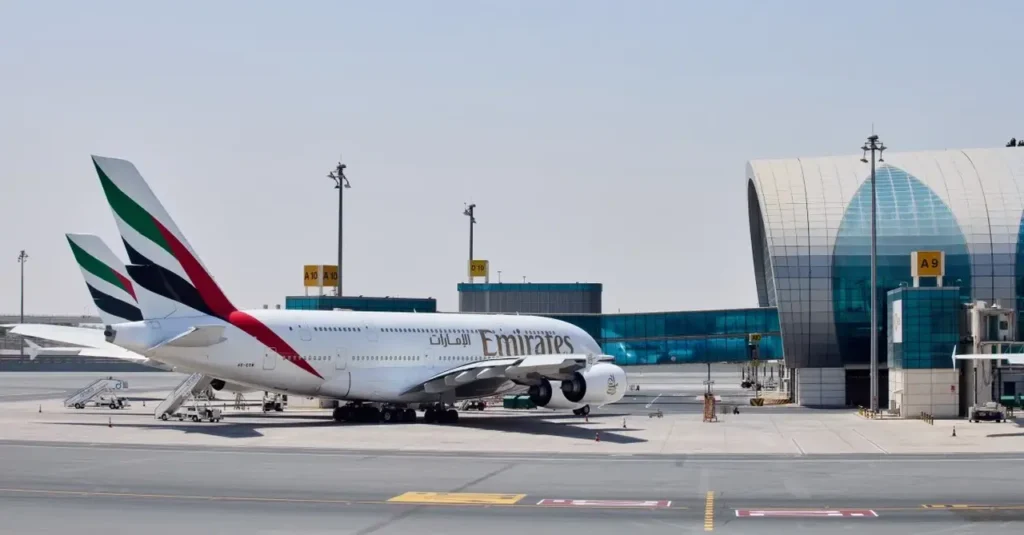
Which Airlines Are Pulling Back and Where
The route suspensions now stretch across nearly every major airline globally. Delta cancelled New York to Tel Aviv flights until at least March 31 and pushed Atlanta to Tel Aviv services out to August 4. Air Canada suspended its Toronto-to-Dubai route until at least May 1. KLM suspended flights to Dubai, Riyadh, and Dammam until May 17.
Additionally, Greece’s Aegean Airlines cancelled services to Tel Aviv, Beirut, Amman, Dubai, and Riyadh, stretching into late April and May. Latvia’s airBaltic suspended flights to Dubai until October 24. Cathay Pacific cancelled all passenger and cargo flights to Dubai and Riyadh until April 30.
Saudi budget carrier Flynas extended suspensions through March 31 for Dubai, Abu Dhabi, Sharjah, Doha, Bahrain, Kuwait, Iraq, and Syria. In short, the route map across the Middle East looks almost empty right now.
Passengers Face Higher Fares and Fewer Choices
For travellers, the combined impact hits hard. Fewer flights mean tighter seat availability, and airlines are pushing fares higher to offset rising fuel costs. Industry analysts suggest airfares could climb a further 5% to 7% on top of increases already locked in.
Beyond the cost, passengers face longer journeys due to rerouting. Flights that previously crossed the Middle East now take longer, following alternative routes, adding time and complexity to connections for millions of travellers on transatlantic and Asia-Pacific routes.
Ryanair chief executive Michael O’Leary advised European travellers to choose destinations closer to home to avoid long-haul routes over Middle Eastern airspace. British Airways is also adding flights to Caribbean destinations to offer alternatives to the disrupted region.
Easter Travel Season Hangs in the Balance
The timing makes this crisis particularly damaging. European airlines carry millions of passengers during the Easter holiday window, and fuel hedges that shielded carriers from price spikes earlier this year are now expiring. Once those hedges run out, airlines will absorb the full impact of current fuel prices directly.
Aviation expert Jim Bell noted that the industry holds enough fuel to get past Easter. However, if the conflict continues into May, the northern hemisphere’s summer travel season faces serious disruption. That scenario would affect hundreds of millions of travellers worldwide.
What Travellers Should Do Now
The situation remains highly fluid. Anyone with travel plans that touch the Middle East or connect through Gulf hubs should contact their airline directly. Most major carriers are offering free rebooking or full refunds on affected routes.
EasyJet chief executive Kenton Jarvis put it plainly: book early to avoid price increases. That advice applies across every major airline and region right now.
The conflict is still active. Cancellations are still mounting. And the pressure on global aviation is nowhere near its peak.