
United Airlines just made a big call. CEO Scott Kirby told employees the airline will cut roughly 5% of its planned flights for the second and third quarters of 2026. The reason is straightforward: jet fuel prices have nearly doubled since late February, and Kirby is not waiting to see how bad it gets before acting.
The Fuel Shock Behind the Decision
The Iran conflict sparked a fuel shock that has hit every major airline hard. Jet fuel costs have surged sharply across the industry in under three weeks. Kirby’s internal memo laid out the worst-case scenario plainly. His planning assumes oil climbs to $175 per barrel and stays above $100 through the end of 2027.
At those price levels, United’s annual fuel bill would rise by around $11 billion. To put that in perspective, United’s best-ever profit year generated less than $5 billion. So the math does not work on unprofitable routes. Kirby put it simply: there is no point burning cash on flying that cannot absorb these fuel costs.
Which Flights Are Going First
United is not cutting randomly. The airline targets red-eye flights and low-traffic days, such as Tuesdays, Wednesdays, and Saturdays, first. Beyond off-peak trims, United has also suspended service to Tel Aviv and Dubai entirely, together accounting for about 1% of its total capacity.
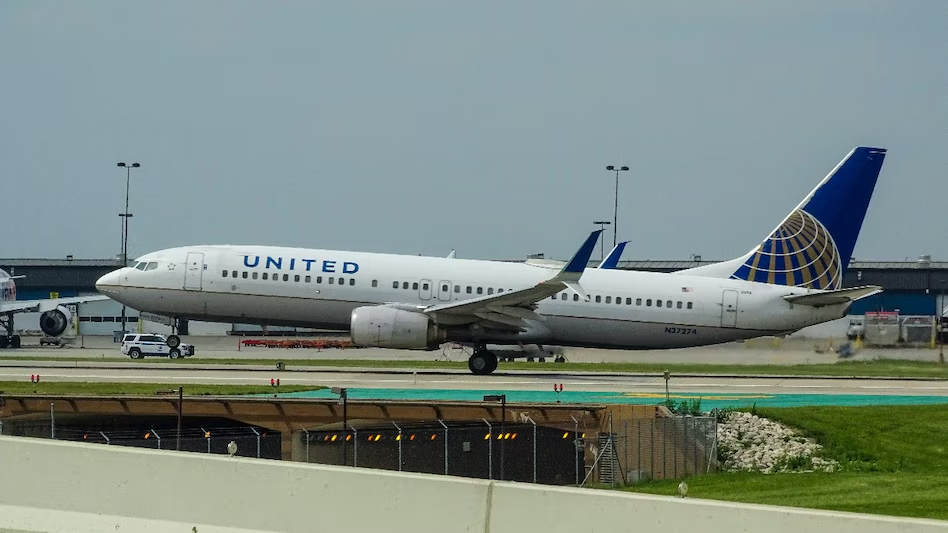
Additionally, the airline will reduce capacity at Chicago O’Hare by 1%, following the Federal Aviation Administration’s own plans to limit flights there this summer. In total, off-peak reductions account for around 3 percentage points of the 5% capacity cut.
Even with flights shrinking, demand stays strong. US carriers have already pushed through two fare increases of around $10 each way. Fares booked over the past week rose 15% to 20%, according to Kirby. Analysts suggest airfares could climb a further 5% to 7% on top of that.
So while travellers face fewer flight options, they also face higher ticket prices. Both trends are moving in the same direction at the same time.
United Is Not Retreating Long Term
Despite the cuts, Kirby told employees that United is not pulling back from its growth strategy. The airline will continue to take delivery of around 120 new aircraft this year, including 20 Boeing 787s. Another 130 aircraft are due by April 2028.
Furthermore, United will not furlough staff or delay future investments the way it did during past downturns. Kirby framed the current cuts as tactical, not structural. The airline expects to restore its full schedule by fall 2026, assuming the conflict situation stabilises.
What This Means for Travellers Globally
United is not the only carrier making these moves. Delta, American Airlines, and Lufthansa are also cutting 5% of flights in response to the same fuel pressure. Together, these reductions shrink capacity on dozens of popular routes across North America, Europe, Asia, and beyond.
For travellers, the practical impact is clear. Fewer seats on fewer routes means higher fares and tighter availability, especially on off-peak travel days. Anyone planning travel through the second half of 2026 should book early and expect to pay more than they did last year.
The conflict is not over. And until fuel prices come down, neither is the pressure on airline schedules worldwide.