
Plitvice Lakes National Park stands as Croatia’s most treasured natural wonder, where cascading waterfalls connect sixteen turquoise lakes through a landscape that seems plucked from fantasy.
This UNESCO World Heritage Site captivates visitors from India and around the world with its unique geological processes, pristine forests, and wildlife, including brown bears, wolves, and lynx.
The park represents not just natural beauty but a living cultural story of conservation, scientific wonder, and humanity’s relationship with untouched wilderness.
Plitvice Lakes National Park at a Glance
| Aspect | Tufa (travertine) barrier formation has been ongoing for 12,000-15,000 years |
|---|---|
| UNESCO Status | World Heritage Site since 1979 |
| Location | Central Croatia, between Zagreb and Zadar |
| Established | April 8, 1949 (Croatia’s first national park) |
| Total Area | 29,685 hectares (296.85 km²) |
| Number of Lakes | 16 interconnected lakes |
| Lake Groups | Upper Lakes (12) and Lower Lakes (4) |
| Highest Waterfall | Veliki Slap (Big Waterfall) – 78 meters |
| Unique Process | Tufa (travertine) barrier formation ongoing for 12,000-15,000 years |
| Annual Visitors | 1+ million (with daily limits in summer) |
| Wildlife | Brown bears, wolves, lynx, 157 bird species, 321 butterfly species |
| Forest Coverage | 75% of park area (including virgin beech-fir forests) |
| Cultural Significance | Conservation efforts dating back to 1893 |
The Living Geological Wonder That Creates Lakes
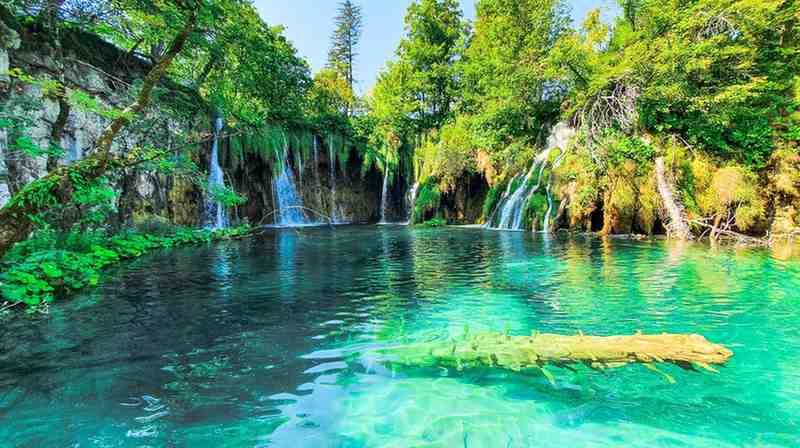
Plitvice Lakes National Park showcases nature as an artist and architect. For over 12,000 years, water flowing through limestone terrain has performed daily miracles. The calcium carbonate-rich waters deposit minerals continuously, building natural dams called tufa barriers that grow taller each year. These barriers create the cascading lake system that makes Plitvice unique worldwide.
The process remains active today. Mosses, algae, and aquatic bacteria interact with flowing water to accelerate tufa formation. Visitors witness geology in action as nature slowly constructs landscapes that will endure for future generations. The sixteen lakes change color throughout the day, shifting from emerald green to deep blue depending on mineral content, the angle of sunlight, and the organisms present in the water.
Upper Lakes and Lower Lakes Tell Different Stories
The twelve Upper Lakes formed on dolomite rock, creating gentler shores surrounded by thick forests. These larger, deeper lakes reflect ancient forests in their still surfaces. Prošćansko Lake, the highest elevation lake, feeds the entire system. Water flows downward through Galovac, Milino, and the massive Kozjak Lake, the park’s largest water body.
The four Lower Lakes carved dramatic limestone canyons with steep cliffs. Milanovac, Gavanovac, Kaluđerovac, and Novakovića Brod occupy this rugged terrain before water plunges over Veliki Slap, the park’s most spectacular waterfall. The 78-meter cascade thunders into the Korana River gorge, creating mist that rainbows dance through on sunny afternoons.
Source: Travel With New Eyes
Cultural Heritage of Conservation and Protection
Plitvice Lakes’ cultural significance extends beyond natural beauty. The Association for the Conservation and Enhancement of Plitvice Lakes was founded in 1893, making it one of Europe’s earliest conservation movements. Local communities recognized the extraordinary value of their landscape over 130 years ago, protecting it before “conservation” became a global concept.
The park became Croatia’s first national park in 1949, establishing Croatian identity around the preservation of natural heritage. The UNESCO World Heritage listing in 1979 recognized Plitvice as a shared human treasure. This cultural evolution from local protection to global recognition demonstrates how natural wonders unite people across borders.
Source: Staybook
Forests Harbor Europe’s Most Magnificent Wildlife
Three-quarters of the Plitvice Lakes are covered by pristine forests, providing crucial habitat for endangered species. The virgin beech-fir forest in the Čorkova uvala basin is Europe’s last remaining old-growth forest, with trees over 300 years old. These forests maintain the delicate hydrological balance necessary for tufa formation.
Brown bears roam mountain slopes, wolves travel in packs through meadows, and the elusive Eurasian lynx hunts silently through dense undergrowth. For visitors from India, where spotting tigers in national parks brings excitement, Plitvice offers similar thrills, allowing them to observe Europe’s apex predators in their natural habitats. Over 321 butterfly, 157 bird, and countless plant species create biodiversity rivaling that of tropical ecosystems.
Don’t Miss:
Best Places to Visit in Bali: Your Complete 2026 Travel Guide
Discovering Vietnamese Culture: Traditions, Customs, and Heritage
Affordable Hotels near Tomorrowland Thailand
Walking Through Paradise on Wooden Pathways
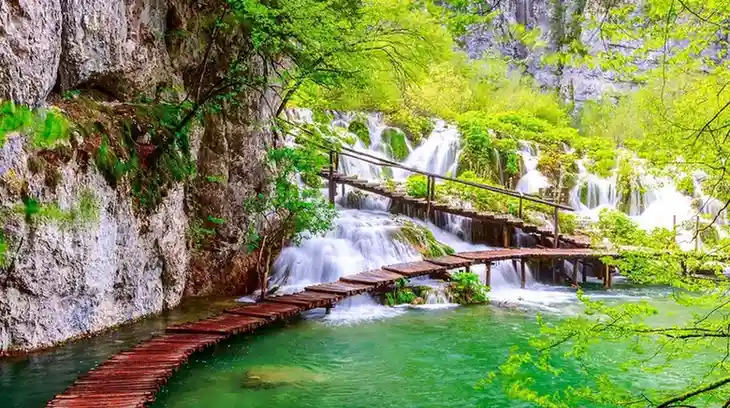
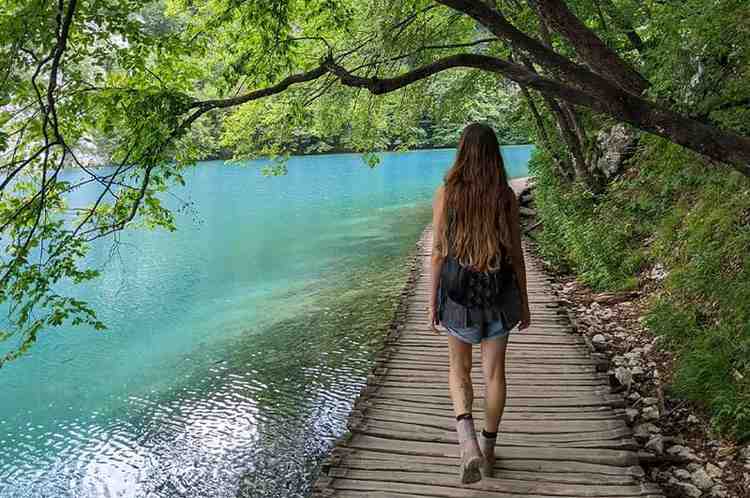
The park provides 18 kilometers of wooden walkways and bridges built directly over water, allowing visitors to walk inches above crystal-clear lakes. These pathways protect fragile tufa formations while offering intimate nature encounters impossible elsewhere. Electric boats quietly ferry visitors across Kozjak Lake, offering a break during longer routes.
Eight marked trails range from two-hour walks to all-day adventures covering the entire park. Trail E (3-4 hours) showcases both Upper and Lower Lakes for visitors with limited time. Trail K (6-8 hours) explores remote corners where crowds disappear, and wilderness dominates.
Source: NomadsTwoGo-Digital Nomad Journey
Challenges of Popularity and Conservation Balance
Success brings challenges to Plitvice Lakes. Over one million annual visitors stress fragile ecosystems. In 2018, UNESCO threatened to remove World Heritage status due to pollution from unmanaged wastewater. Park management responded with summer visitor caps of 12,000 per day, timed-entry tickets, and improved infrastructure.
Water quality monitoring continues constantly. Scientists track tufa formation rates, algae populations, and water transparency to detect environmental changes early. The tension between tourism economics and nature preservation mirrors challenges facing protected areas worldwide, from India’s national parks to America’s Yellowstone.
Also read:
Trending Travel Destinations 2026: Where the World is Heading
Budget Travel to Vietnam: Complete Guide to Exploring Vietnam Under ₹35,000
Experiencing Plitvice Lakes Across Seasons
Each season transforms the character of Plitvice Lakes completely. Spring brings wildflower meadows and swollen waterfalls from snowmelt. Summer offers lush green forests and comfortable walking temperatures, though crowds peak in July through August. Autumn paints forests in golden yellows and brilliant reds reflected in still lake surfaces. Winter freezes waterfalls into ice sculptures, creating otherworldly landscapes resembling fantasy films.
The park operates year-round, though winter visitors find fewer services and trails. Photography enthusiasts particularly treasure winter’s ethereal beauty and smaller crowds.