
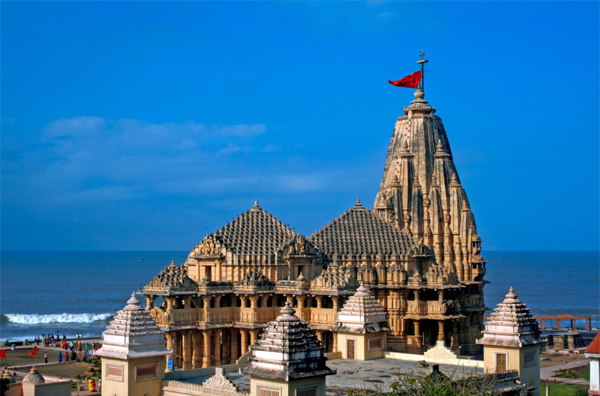
Somnath isn’t just a temple. It stands as proof of faith that refuses to crack, no matter what. Sitting right on the bright, breezy coast of Gujarat’s Saurashtra region, this place pulls in millions of people every year, devotees, curious travelers, everyone. It’s the first of India’s twelve famous Jyotirlingas, so the spiritual pull here is strong. But it’s not just about religion. Somnath lets you step right into India’s deep history, all while the sea sparkles nearby.
You May Also Like:
International Kite Festival Gujarat 2026: Where the Sky Becomes Canvas
Best Places to Visit in Konkan 2026: Beaches, Hill Stations & Hidden Gems
Essential Information at a Glance
| Category | Details |
|---|---|
| Location | Prabhas Patan, Veraval, Gujarat |
| Religious Significance | First of 12 Jyotirlingas dedicated to Lord Shiva |
| Temple Timings | 6:00 AM to 10:00 PM daily |
| Aarti Timings | Morning (7:00 AM), Noon (12:00 PM), Evening (7:00 PM) |
| Sound & Light Show | 8:00 PM to 9:00 PM (except monsoon season) |
| Best Time to Visit | October to March |
| Nearest Airport | Diu Airport (85 km), Keshod Airport (57 km) |
| Nearest Railway Station | Veraval Railway Station (7 km), Somnath Terminus (2.5 km) |
| Distance from Major Cities | Ahmedabad (410 km), Junagadh (82 km), Porbandar (120 km) |
The Sacred Story of Somnath
Somnath means “Lord of the Moon,” and there’s an old story behind that name. In Hindu mythology, Chandra, the Moon God, worshipped Lord Shiva right here. The story goes like this: Chandra married all 27 daughters of Daksha Prajapati, but he only really cared for Rohini and ignored the rest. Daksha didn’t take that well. Furious, he cursed Chandra so his light would fade away. Desperate, Chandra came to Prabhas Patan and threw himself into deep prayer, hoping Shiva would help. Shiva answered, but instead of restoring him fully, he gave Chandra a rhythm waxing and waning, not total darkness. To thank Shiva, Chandra set up the Jyotirlinga at this spot, and that’s how the Somnath Temple came to be.
This temple’s story stretches back more than a thousand years, full of ruin and rebuilding. People started recording their history in the 7th century, but if you look at ancient texts like the Mahabharata, the Bhagavata Purana, and the Shiva Purana, you’ll find hints that it’s even older. Archaeologists have found proof that a big temple stood here by the 9th or 10th century.
The temple’s story is full of chaos and survival. Back in January 1026, Mahmud of Ghazni stormed in, looted a fortune, people say around 20 million dinars, and smashed the sacred Jyotirlinga. That wasn’t the end of it. Over the centuries, Somnath faced five more major attacks: Alauddin Khalji in 1299, Muzaffar Khan in 1394, Aurangzeb in 1706, and others who tried to break its spirit. But every time, after the dust settled, faithful rulers and local communities rebuilt the shrine. Somnath didn’t just survive; it became a symbol of how spiritual strength can outlast even the harshest blows
This temple, as it stands now, is actually its seventh version. Sardar Vallabhbhai Patel, India’s first Deputy Prime Minister, began rebuilding in 1947. Skilled Somapuri temple builders from Gujarat took over from there, sticking to traditional techniques. By May 11, 1951, President Rajendra Prasad came to do the official installation, but Patel never got to see it finished; he passed away before then. Fast-forward to 2026, and the temple will hit two big milestones: 1,000 years since the first recorded attack and 75 years since it reopened after independence.
How to Plan Your First Kashmir Trip in 2026
Architectural Splendor
The Somnath Temple stands out with its stunning Kailasa Mahameru Prasad style, true to the classic Nagara tradition of North Indian temples. You’ll notice the honey colored stone, every inch of it carved with incredible detail. The complex comprises three main parts: the Garbhagriha, where the sacred Jyotirlinga sits at the heart of the temple; the Sabhamandapa, which brings people together for worship; and the Nrityamandapa, the space set aside for dance and devotion. Above it all, a huge shikhara rises, like a mountain reaching up to the heavens, tying the earthly and the divine together.
Somnath sits right where the rivers Kapila, Hiran, and Saraswati meet the Arabian Sea, a spot Hindus call a Triveni Sangam, which means it’s especially sacred. The temple’s right on the coast, so the sea is always close, waves rolling in and out. That mix of water and open sky gives the whole place this amazing, almost otherworldly feeling. It’s the kind of view that makes you want to stop, breathe, and just take it all in. Perfect for prayer, or just standing there, lost in thought.
Planning Your Visit
If you’re traveling from within India, getting to Somnath is pretty straightforward. The town’s connected by road, rail, and even air from most major cities. Coming from Ahmedabad? You can hop on a train to Veraval Railway Station, or just drive; it usually takes about six or seven hours. Buses run regularly from all over Gujarat, too. If you’re starting out in Mumbai, overnight trains will get you to Veraval. From there, it’s just a short ride in a taxi or auto-rickshaw to the temple.
If you’re coming from abroad, you’ll probably land at Ahmedabad’s Sardar Vallabhbhai Patel International Airport. It’s a busy place, with flights arriving from cities like Dubai, London, and Singapore, and even a few from the US. Once you touch down in Ahmedabad, you’ve got options. You can hop on a domestic flight to Diu or Keshod, grab a private car, or just take a train if you prefer to watch the countryside roll by on your way to Somnath. Most international travelers don’t stop at just one place, either. They usually explore other spots in Gujarat, like Dwarka, Gir National Park, and Ahmedabad itself, making it a full trip.
Best Season: People come all year, but October to March is when the weather really feels nice, think 15°C to 30°C (59°F to 86°F). You skip the scorching heat and heavy rains, so walking around and exploring is actually enjoyable. Winter is especially popular, thanks to festivals like Mahashivratri. The temple comes alive with celebrations and rituals, and the whole place turns into a buzzing spiritual center.
Goa Trip on Low Budget: How to Plan a Cheap Trip in 2026
Beyond the Temple: Must-Visit Attractions
Somnath Beach: This pristine stretch of golden sand lies adjacent to the temple, offering spectacular views of the sunrise and sunset. The beach provides a peaceful setting for reflection and leisurely walks along the Arabian Sea.
Bhalka Tirth: Located about five kilometers from Somnath, this sacred site marks the spot where Lord Krishna was accidentally struck by an arrow, leading to his departure to the heavenly abode. The temple here commemorates this significant event from Hindu mythology.
Triveni Sangam: Witness the sacred confluence where three rivers meet the sea, a powerful spiritual symbol in Hindu tradition. Early morning visits offer particularly serene experiences.
Gir National Park: Approximately 60 kilometers away, this wildlife sanctuary is the last refuge of the Asiatic lion. Safari enthusiasts can spot these majestic creatures along with leopards, deer, and numerous bird species.
Prabhas Patan Museum: This archaeological museum houses ancient artifacts, sculptures, and inscriptions that chronicle Somnath’s rich historical journey.
Veraval: The nearby fishing town offers insights into Gujarat’s maritime heritage and bustling fish markets, where you can observe traditional coastal life.
Experiencing Somnath
Temple Rituals: Attending the daily aarti ceremonies provides profound spiritual experiences. The morning aarti at 7:00 AM welcomes the new day with melodious chants, while the evening aarti at 7:00 PM, performed as the sun sets over the Arabian Sea, creates an unforgettable ambiance. Devotees also appreciate the noon aarti at 12:00 PM.
Sound and Light Show: Each evening at 8:00 PM (except during the monsoon season), the temple complex hosts an impressive sound-and-light show narrated in Amitabh Bachchan’s iconic voice. This hour-long presentation brings Somnath’s dramatic history to life through colorful illuminations and compelling storytelling, perfect for understanding the temple’s civilizational significance.
Local Experiences: Explore the vibrant local bazaars near the temple, where you can buy traditional handicrafts, seashell artifacts, mirror-work clothing, Gujarati silk sarees, and religious souvenirs. Sample authentic Gujarati vegetarian cuisine at nearby restaurants, featuring dishes such as dhokla, khandvi, undhiyu, and traditional Gujarati thali meals.
Accommodation Options
Somnath offers accommodation ranging from budget guesthouses to comfortable hotels. The Somnath Trust Guest House provides clean, affordable rooms for pilgrims.
| Category | Hotel Name | Key Highlights |
| Mid-Range | The Fern Residency | Modern amenities, reliable service, close to temple. |
| Mid-Range | Lords Inn | Comfortable rooms, modern facilities, great location. |
| Mid-Range | Sarovar Portico | Well-known hospitality, proximity to the temple. |
| Premium | VITS The Somnath Gateway | Luxury stay, multi-cuisine dining, excellent service. |
| Premium | Regenta Central | Sea views, luxury accommodations, premium service. |
Practical Tips for Visitors
Entry to the Somnath Temple is free, though donations are welcome. Photography inside the temple premises is strictly prohibited, but you can purchase professional photographs from authorized souvenir shops. Electronic devices, including mobile phones, cameras, and bags, cannot be carried inside the temple, though secure locker facilities are available at nominal charges near the entrance.
Dress modestly when visiting the temple. Visitors should wear clothing that covers their shoulders and knees. Avoid shorts, miniskirts, or revealing attire out of respect for the sacred space. Remove footwear before entering the temple complex, and maintain silence during prayers and rituals.
Security checks are mandatory for all visitors. Arrive early during festivals and weekends to avoid lengthy queues. The temple campus is wheelchair accessible, ensuring devotees with mobility challenges can comfortably participate in darshan.
Combining Somnath with Other Destinations
Many travelers combine Somnath with nearby spiritual destinations to create comprehensive Gujarat pilgrimage circuits.
Main Destinations & Spiritual Highlights
- Somnath: Shree Somnath Jyotirlinga Temple, Bhalka Tirth (where Lord Krishna departed), Triveni Sangam (confluence of three rivers), and Gita Mandir.
- Dwarka: Dwarkadhish Temple (Jagat Mandir), Bet Dwarka (reachable by ferry), Nageshwar Jyotirlinga, and Rukmini Devi Temple.
- Porbandar: Kirti Mandir (Mahatma Gandhi’s birthplace) and Sudama Temple (dedicated to Krishna’s childhood friend).
- Junagadh: Girnar Hill (temples atop the mountain), Mahabat Maqbara, and the Uparkot Fort.
- Diu: Gangeshwar Mahadev Temple (idols washed by sea waves), Diu Fort, and Naida Caves.
- Sasan Gir: Gir National Park, the only abode of the Asiatic lion.
Explore More:
Thailand Travel Guide 2026: Your Dream Tropical Escape
Tomorrowland Thailand 2026: How to Pre-Register Online
Road Route Guide
The most popular route for this circuit is the Coastal Highway (NH 51), which offers scenic views of the Arabian Sea.
| From | To | Distance | Time | Route |
|---|---|---|---|---|
| Somnath | Porbandar | 120 km | 2.5–3 hours | NH 51 (Coastal Highway) |
| Porbandar | Dwarka | 105 km | 2–2.5 hours | NH 51 (via Harshad Mata) |
| Somnath | Sasan Gir | 50 km | 1–1.5 hours | Somnath–Sasan Road |
| Somnath | Junagadh | 95 km | 2 hours | NH 151 |
| Somnath | Diu | 90 km | 2 hours | NH 51 (towards east) |
Final Thoughts
Somnath represents far more than architectural beauty or religious significance. It embodies the enduring spirit of a civilization that refused to let repeated destruction extinguish its sacred flame. Whether you seek spiritual fulfillment, historical knowledge, architectural appreciation, or coastal tranquility, Somnath welcomes all visitors with open arms and timeless wisdom.
Standing before the magnificent temple as ocean waves crash against ancient stones, you witness not just a monument but a living symbol of faith, resilience, and India’s unbroken cultural continuity. Every prayer chanted, every bell rung, and every wave that touches these shores tells the story of a thousand years of devotion that no force could diminish. Visit Somnath, and you will carry home not just memories but a profound connection to something eternal.